No tail rotor
The configuration removes tail-rotor failure, a leading cause of loss-of-control accidents, from the equation entirely.

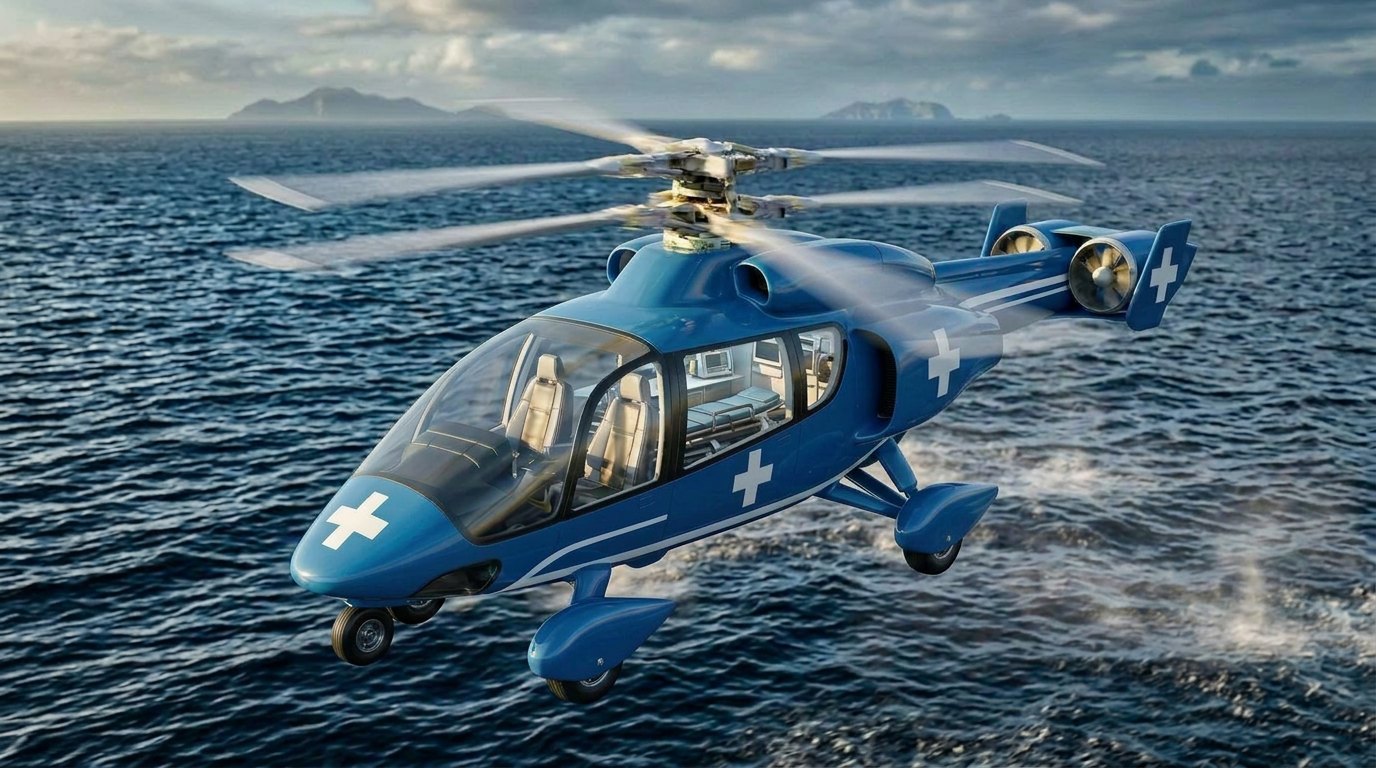
The most dangerous failure modes in helicopter air ambulance operations are designed out of the Avectra 101, making safety a structural property of the aircraft.
Traditional helicopters are exposed to two well-known and dangerous phenomena: vortex ring state, where the rotor descends into its own downwash and loses lift, and tail-rotor failure, which can cause an immediate loss of control. Combined with demanding, unplanned landing sites, this gives HEMS a disproportionately high accident rate.
The Avectra 101 removes these risks at the source rather than mitigating them with procedure and training alone.
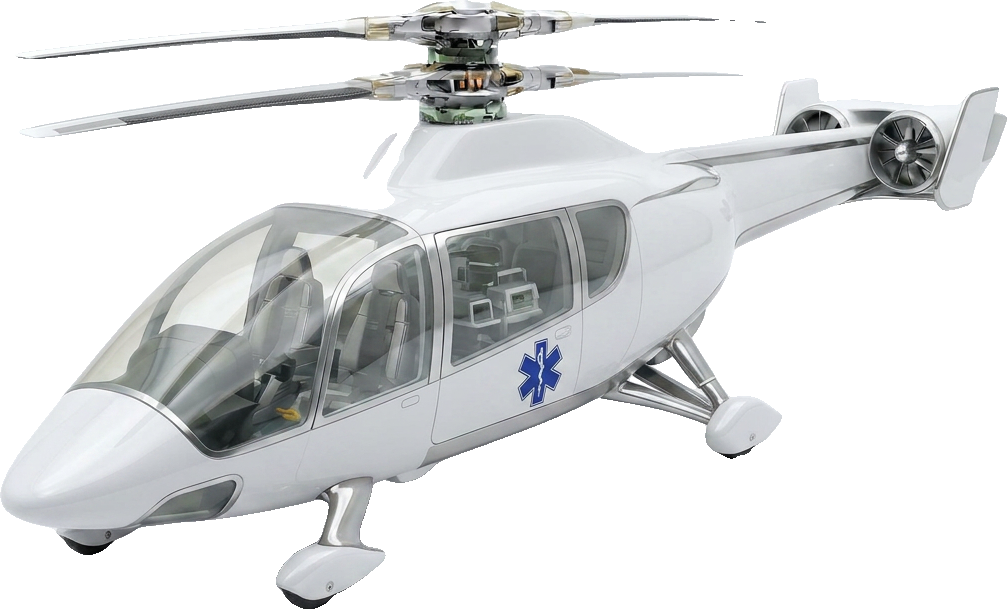
The configuration removes tail-rotor failure, a leading cause of loss-of-control accidents, from the equation entirely.
A freely autorotating rotor cannot settle into its own downwash, eliminating this classic and often fatal helicopter hazard.
Because airflow drives the rotor from below, it keeps turning regardless of engine state. There is no aerodynamic stall to recover from.
Engine failure transitions into a controlled autorotative glide, giving the crew a landing rather than an emergency descent.
When the dominant accident causes are physically impossible, safety stops being a function of luck or technique. The improvement comes from the airframe itself, the same design that lowers cost and widens capability.
Request Aurenda’s technical safety briefing for regulators, operators and procurement teams.